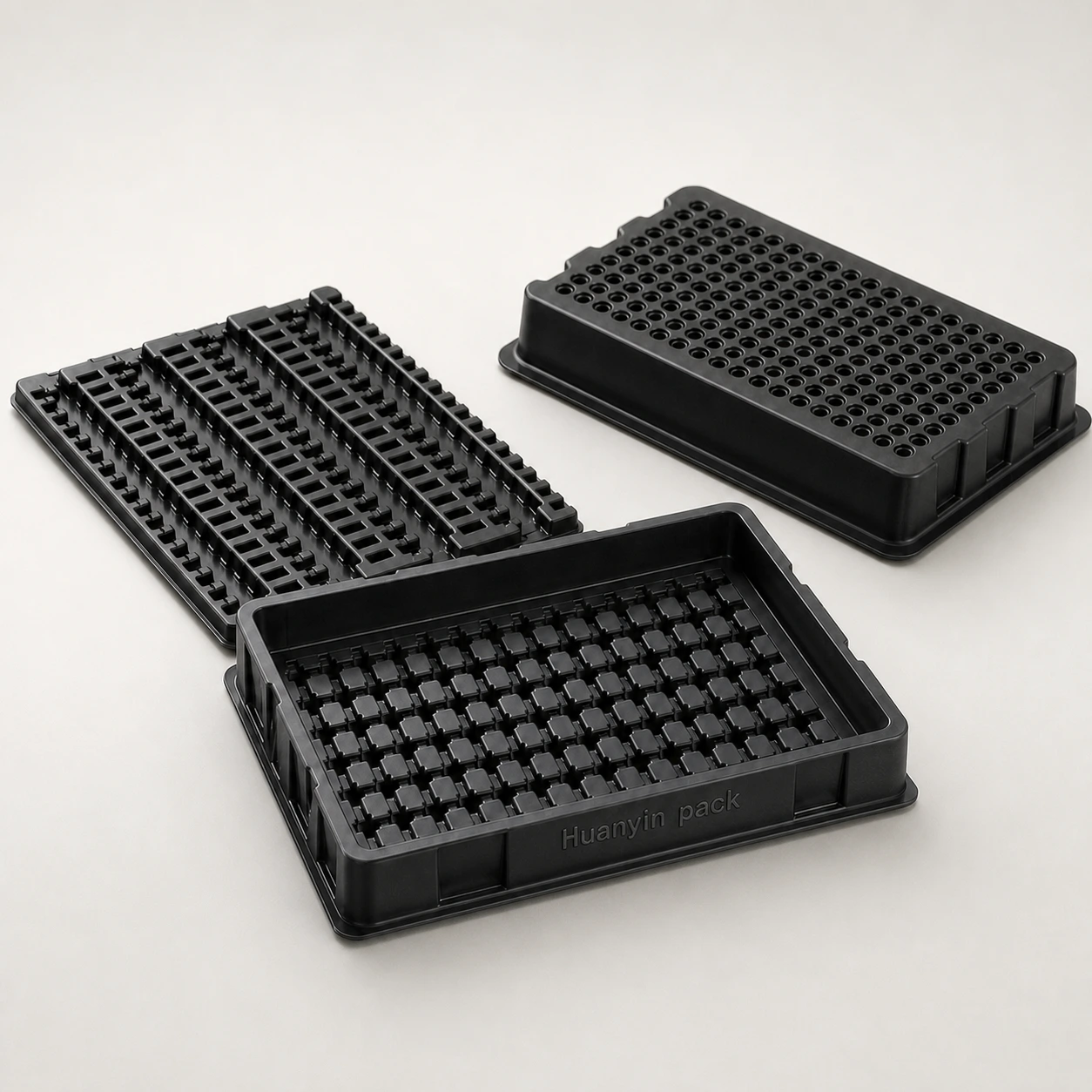
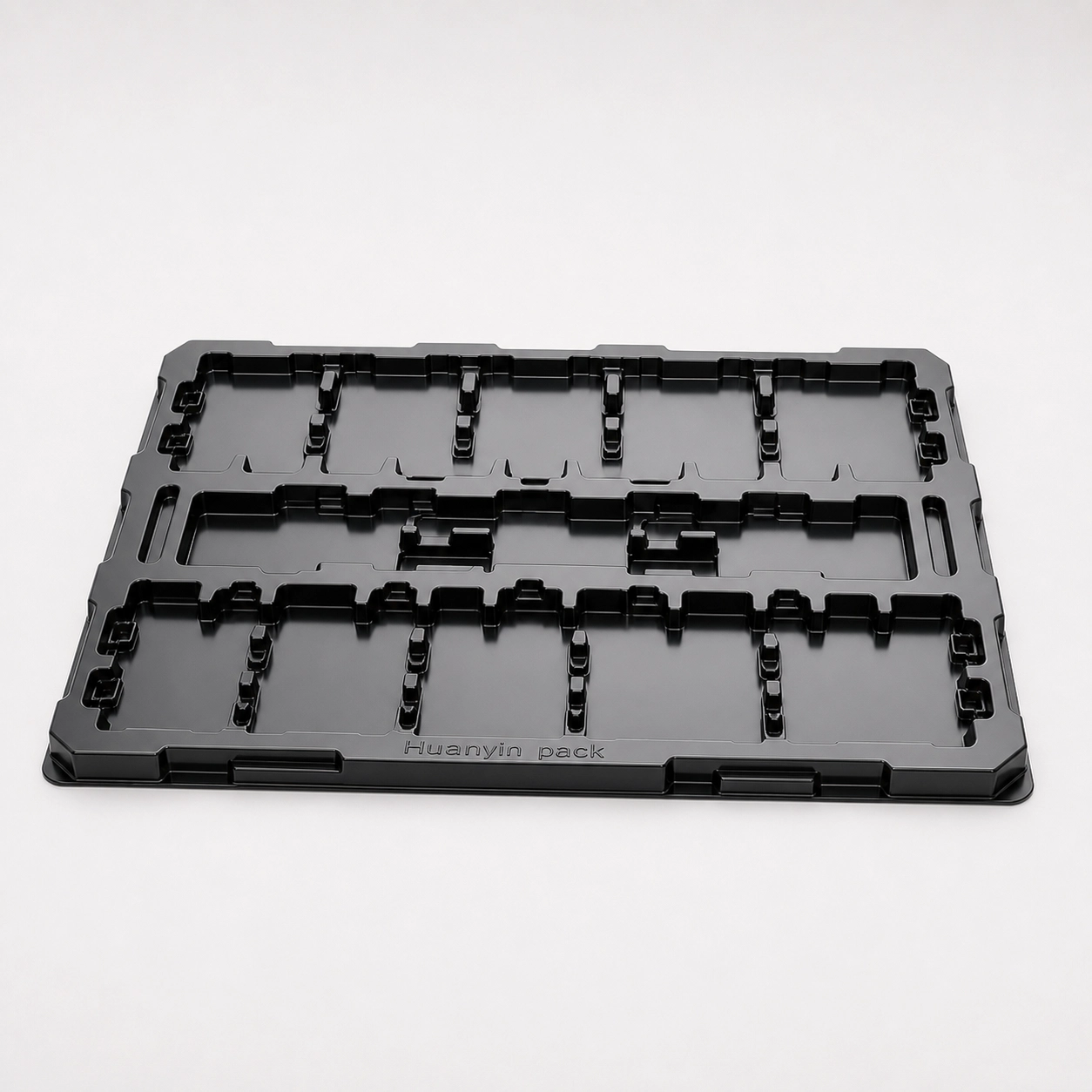
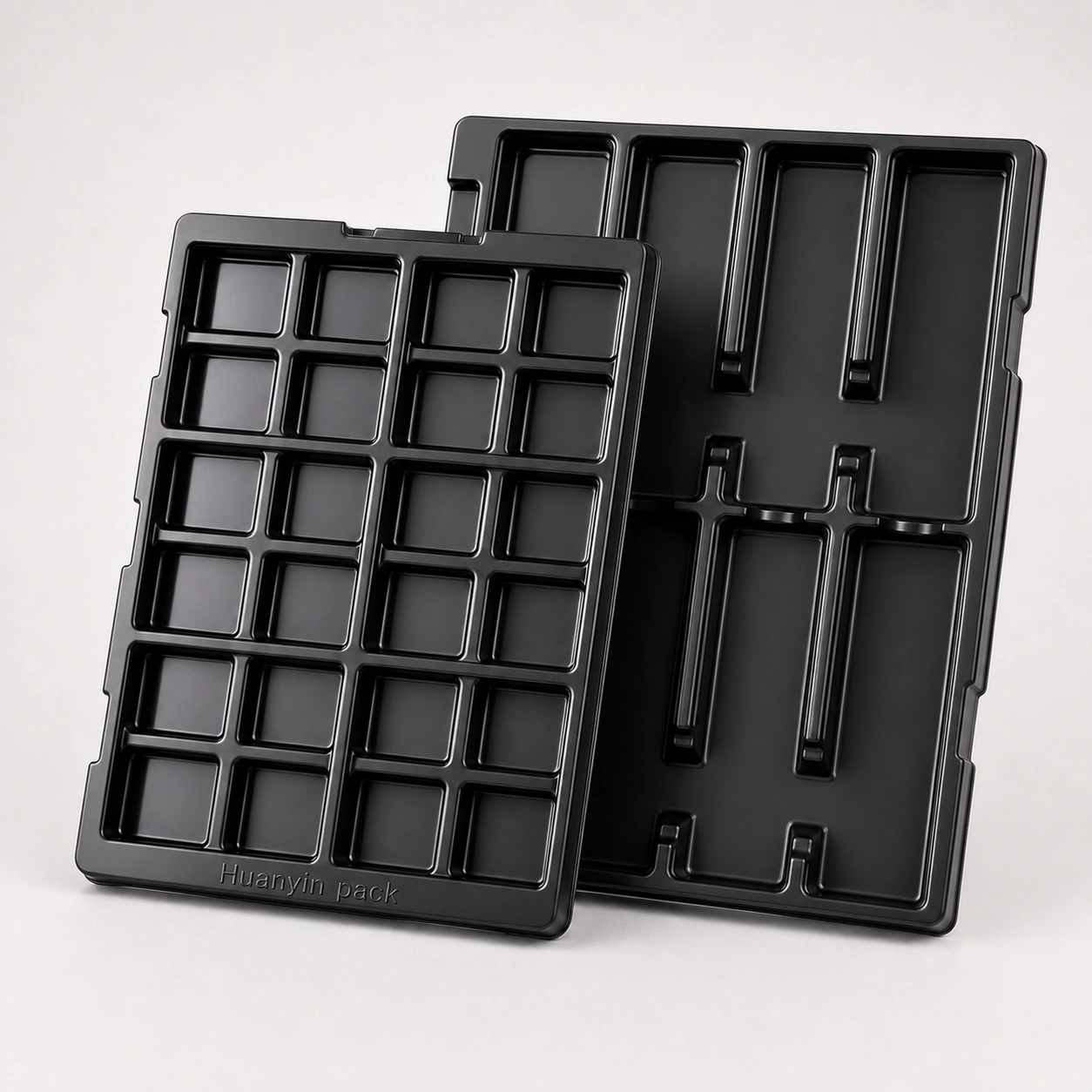
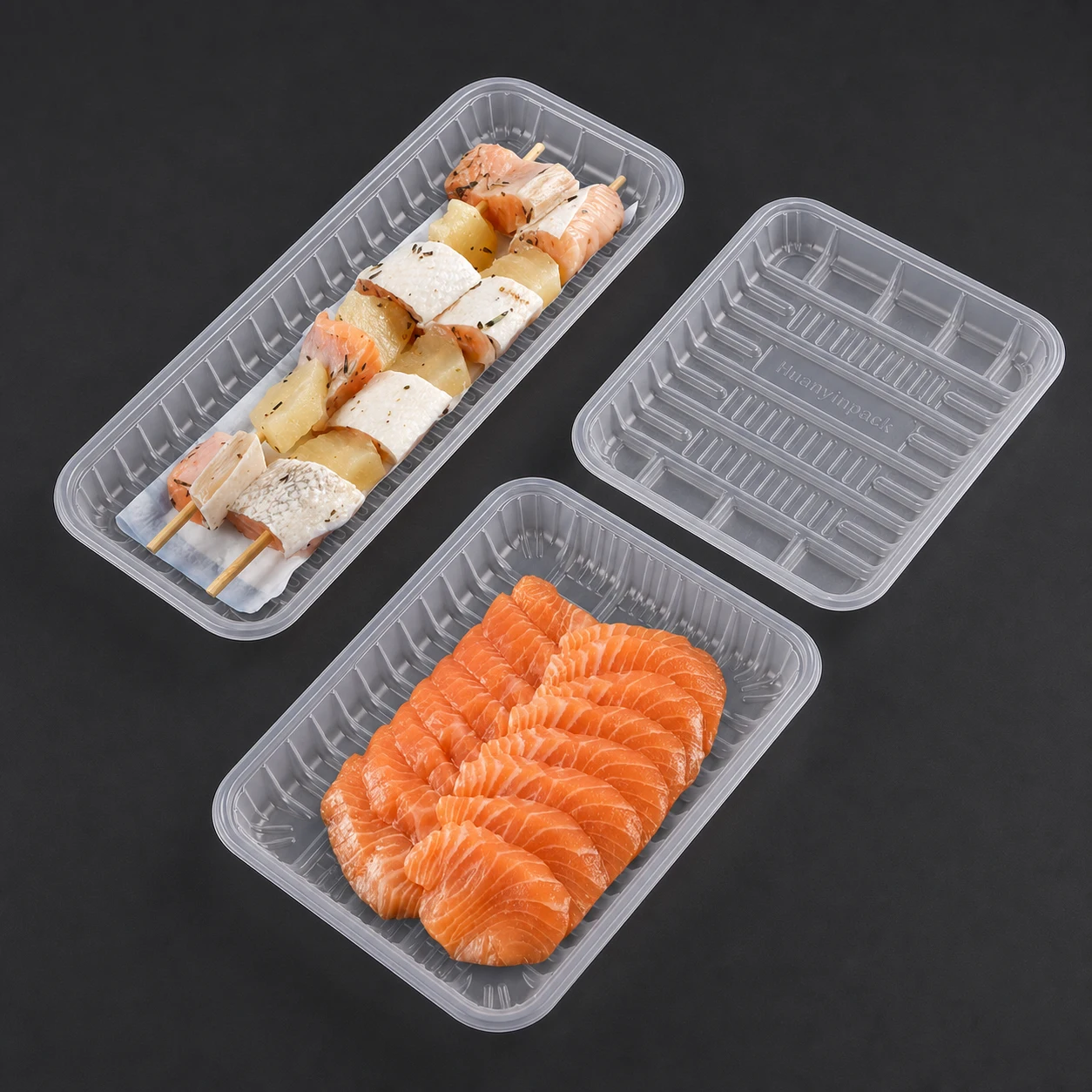
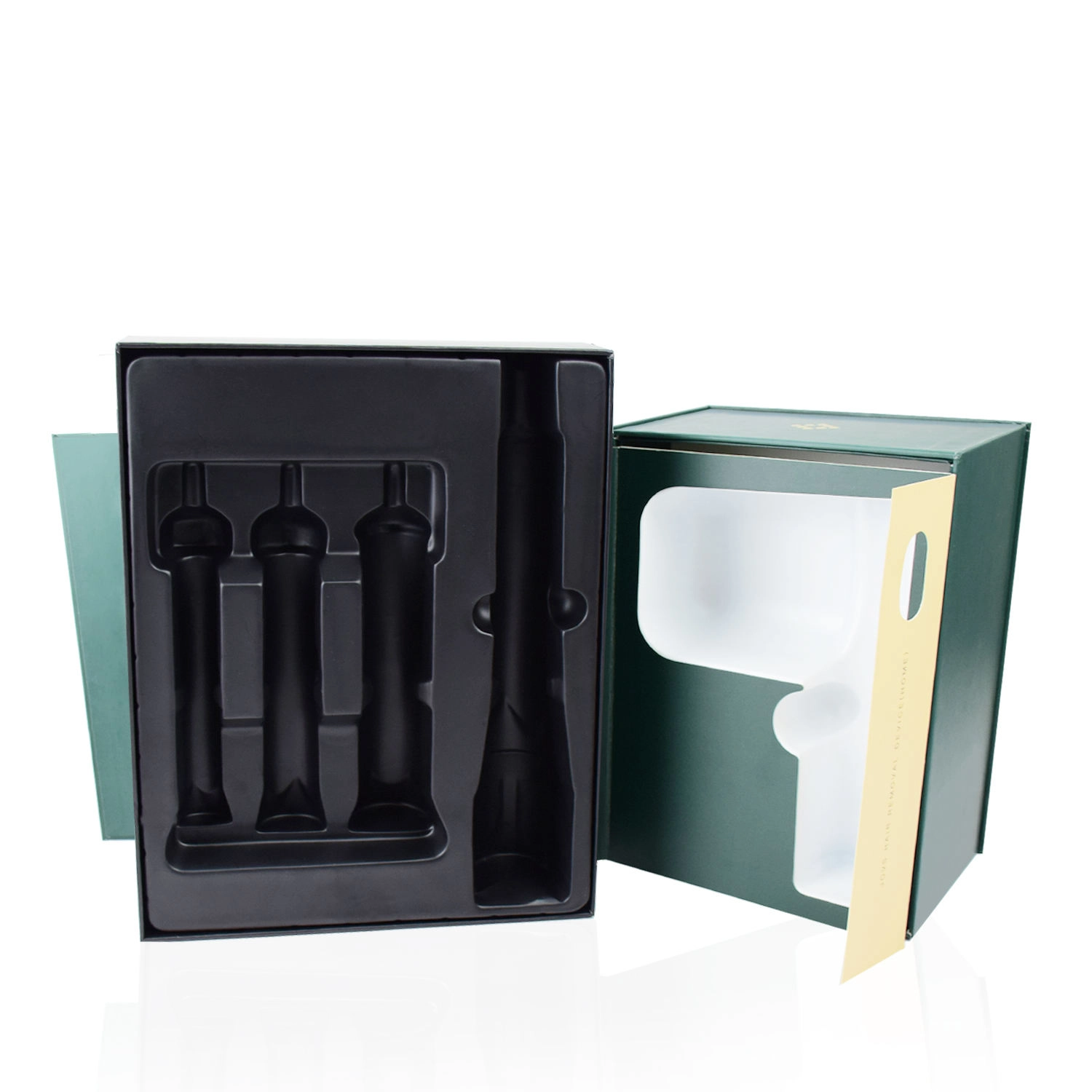
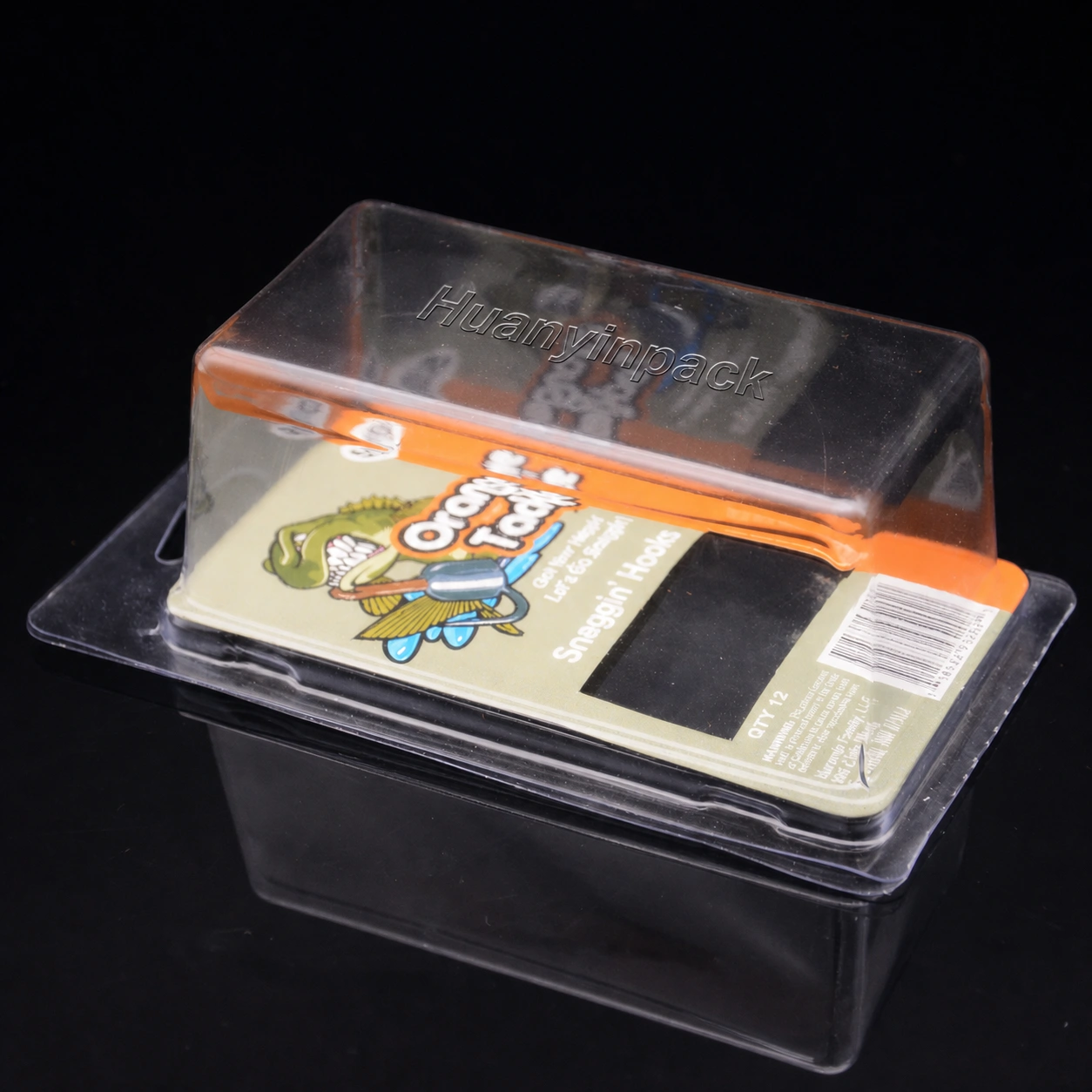
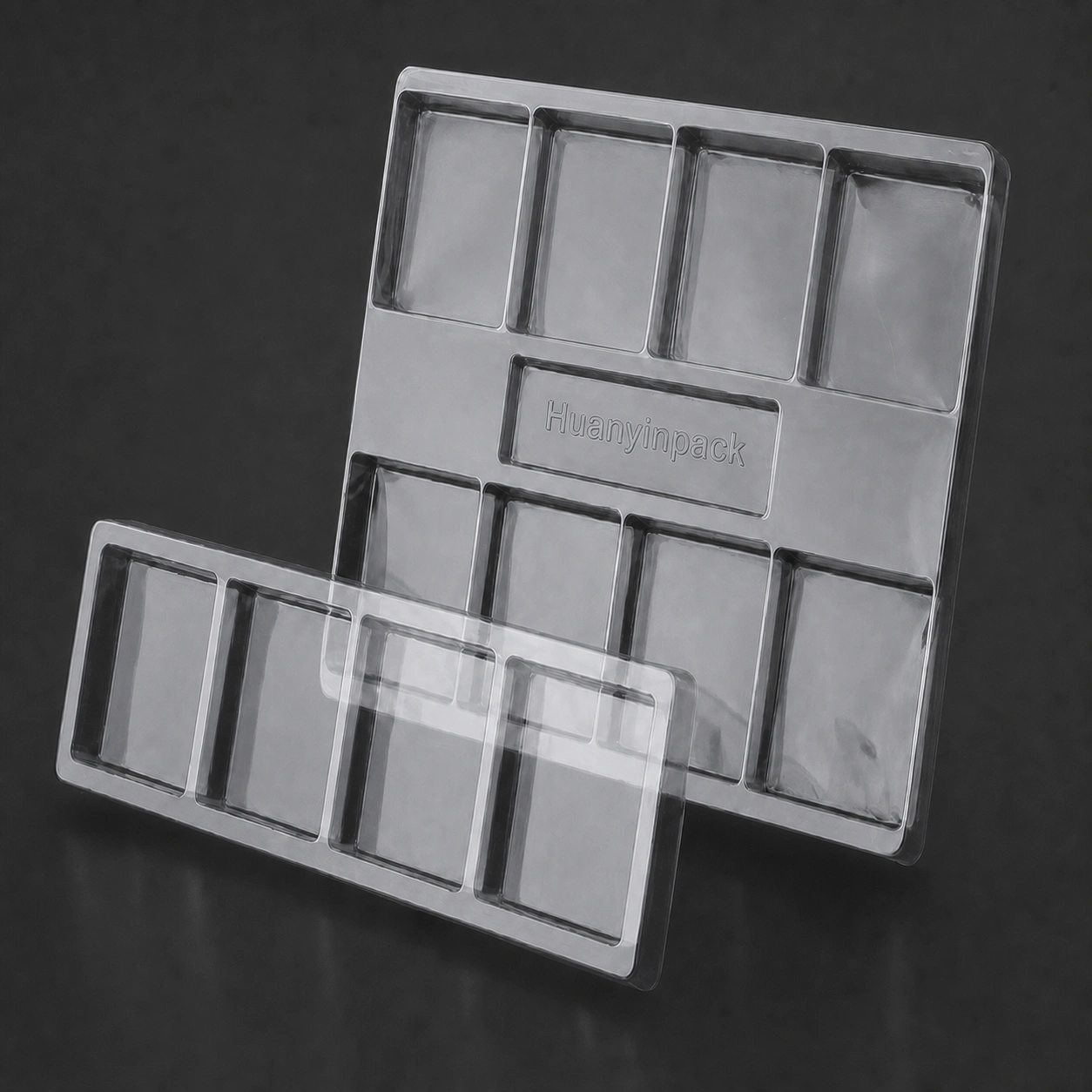
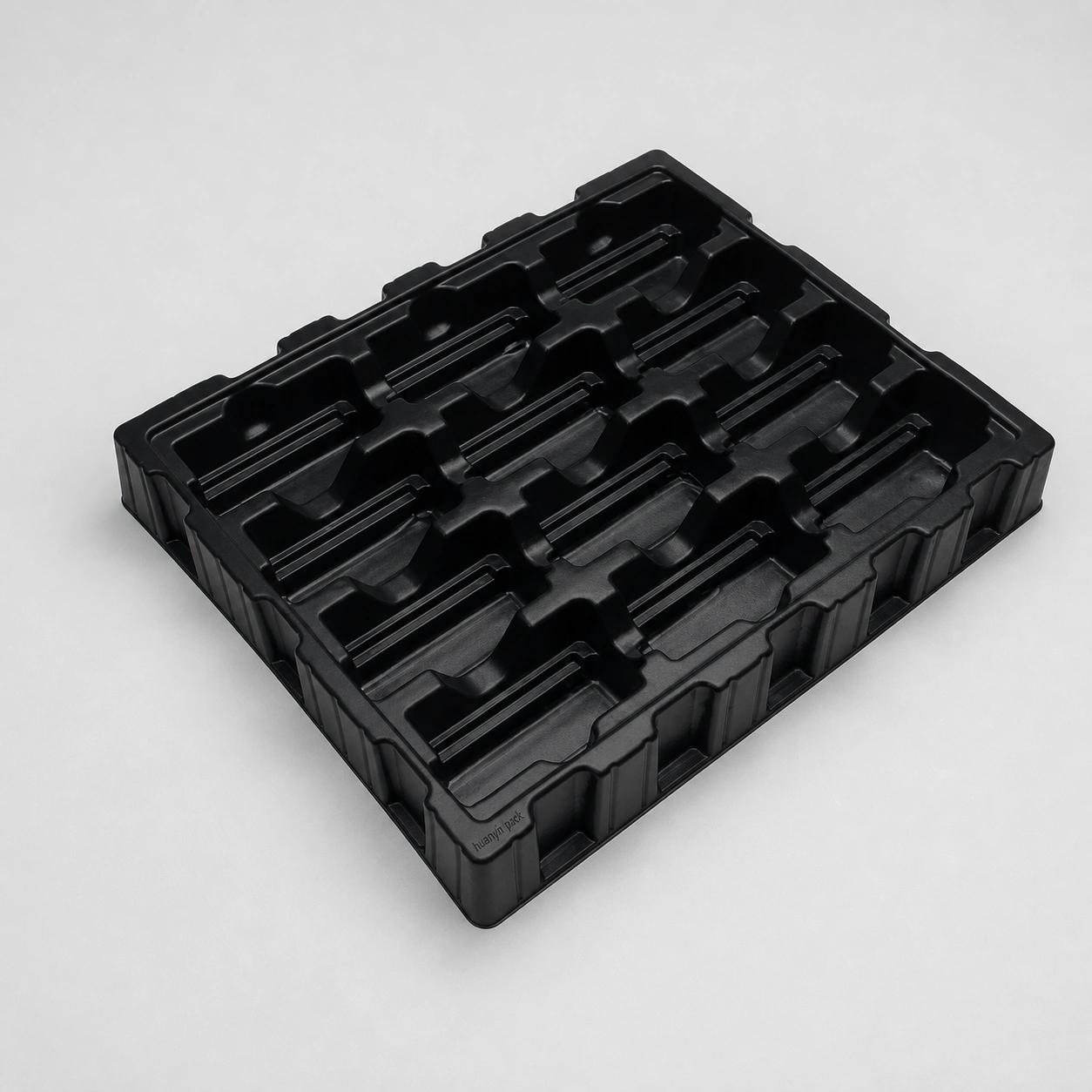
The ESD PET tray is a black thermoformed tray that seats electronic parts in fitted cavities so they stay put and protected from static during handling, transport, and line turnover. As an anti-static blister tray or a conductive plastic tray, it is built to the ESD level your program requires and doubles as an electronic component tray for PCBs, connectors, and modules.
Specifications and customization
| Option | Standard (as shown) | Customizable range |
|---|
| Type | Thermoformed ESD tray | Matrix, JEDEC-style, multi-cavity, blister |
| Material | Black conductive PET | Anti-static coated PET, PS, PC (high-temp/battery) |
| ESD level | Conductive 10^3-10^5 ohm | Dissipative 10^6-10^9, anti-static 10^9-10^11 |
| ESD make-up | Carbon-compounded, permanent | Surface-coated for one-way (about 6-12 months) |
| Color | Black | - |
| Gauge (wall) | Configurable to weight | 0.3-1.5 mm |
| Cavities | Formed to the component | Any layout and matrix pitch |
| Loop | Returnable turnover | One-way shipment |
| Tooling / MOQ | Configurable, no strict minimum | - |
| Lead time | Configurable to order | - |
ESD level and make-up
The tray is quoted by the surface-resistance band your ESD program calls for: conductive at 10^3 to 10^5 ohm, static-dissipative at 10^6 to 10^9, or anti-static at 10^9 to 10^11. Black carbon-compounded PET carries the property through the whole sheet, so it lasts and suits returnable loops. A surface-coated grade is the lower-cost choice for one-way shipment.
Cavities and turnover
Each cavity is thermoformed to one part, so components sit square with no rattle or abrasion, ready for manual or automated pick-and-place. An ESD turnover tray stacks and de-nests for line-side feeding and returns through the loop many times. Send a sample or drawing and the sample room forms the cavities and pitch to match your part.
Choosing the grade
Spec the tray from your ESD control plan, not from color alone. Returnable turnover between stations favors carbon-compounded conductive PET, which does not fade. One-way shipment can use a coated anti-static grade, which is humidity-sensitive and time-limited. For reflow heat or battery cells, a high-temperature sheet such as PC is used instead of PET.
Applications
Use the electronic component tray for PCBs and PCBAs, connectors, ICs and modules, sensors, and small metal or plastic parts. The fitted cavities protect leads and finishes, the conductive body drains static, and the flat tray stacks for storage and feeds cleanly into assembly, test, and shipping.
Get a quote
Send your component, a sample or drawing, the ESD resistance target, and whether the loop is one-way or returnable, and we will form a dieline and quote the tray with a sample for your approval. ISO 9001 and 14001 systems and clean-room thermoforming keep the parts consistent lot to lot.
FAQ
Conductive, dissipative, or anti-static, which do I need? It depends on your ESD control plan and the parts. Conductive drains charge fastest for sensitive components, dissipative is a controlled middle, and anti-static prevents charge build-up. Tell us the surface-resistance band your program specifies and we build to it.
Is black enough to prove it is ESD-safe? No. Color is not proof, the additive and its resistance are. We supply the tray to a measured surface-resistance band and can provide a report per lot, so you verify the property rather than trust the color.
Returnable or one-way, does it change the material? Yes. Returnable turnover trays use carbon-compounded PET so the property lasts through many loops. One-way trays can use a coated anti-static grade, which is cheaper but fades over months. Tell us the loop and we match the make-up.
What is a realistic order quantity? There is no strict minimum, but the forming tool and sheet setup spread over the run, so small batches cost more per piece and price drops sharply with volume. Tell us your annual volume and we advise the break points.